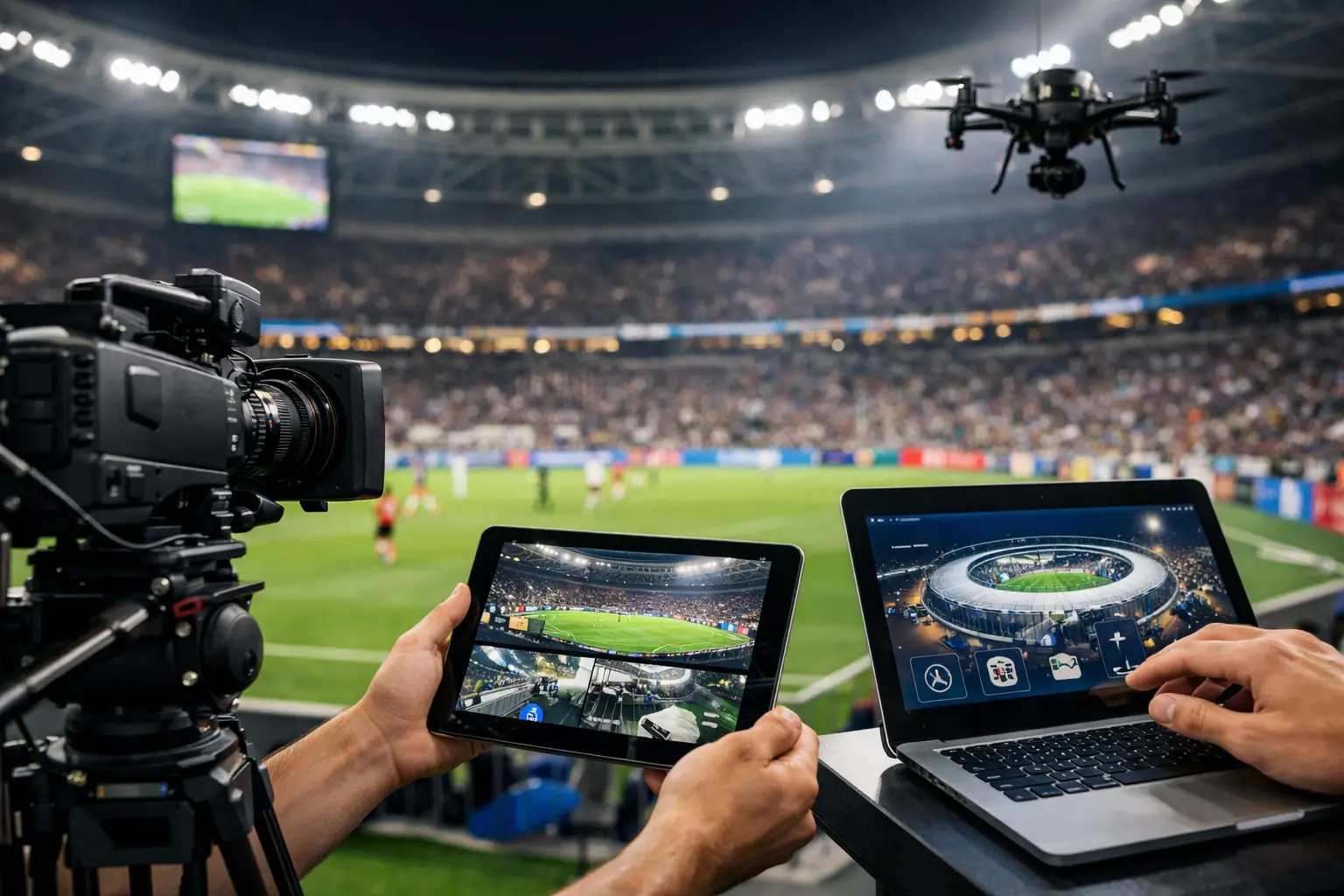
A packed Atlanta sports bar can lose a full room in minutes when the match freezes, payment terminals lag, and guest WiFi collapses at the same time. That is why world cup venue technology trends matter well beyond the stadium. During the 2026 tournament, every screen, access point, point-of-sale terminal, camera, and staff device will compete for capacity when demand is at its highest.
For commercial operators, the priority is not buying the newest equipment for its own sake. It is building an environment that keeps serving guests when traffic surges, a provider has an issue, or one component fails. The venues that perform best will treat technology as match-day infrastructure: tested, monitored, staffed, and ready to recover fast.
World Cup Venue Technology Trends Are Moving Beyond WiFi
The first major shift is from basic connectivity to capacity engineering. Many businesses still assess WiFi by asking whether customers can connect. That test is far too simple for a high-volume event. The real question is whether hundreds of guests can connect while dozens of televisions stream, staff process payments, digital menus update, security cameras record, and management systems remain available.
A venue may have a fast internet plan and still deliver a poor experience. Bandwidth is only one factor. Access point placement, channel planning, wired backhaul, interference, device density, and traffic prioritization determine what guests actually experience. A crowded room full of phones can overwhelm poorly designed wireless coverage even before the first goal.
WiFi 6E and WiFi 7 are receiving attention because they can improve performance in dense environments, particularly where compatible devices can use newer spectrum. But an equipment upgrade is not automatically the right answer. Older cabling, underpowered switches, limited ISP capacity, or poor radio design can erase the benefit. Start with a site survey and traffic forecast, then build the upgrade around the venue's actual layout and match-day load.
Guest WiFi also needs separation from business-critical traffic. Point-of-sale terminals, streaming equipment, staff devices, cameras, and guest phones should not occupy one flat network. Segmentation limits congestion and reduces the blast radius when a guest device, compromised account, or failing system creates a problem.
Streaming reliability becomes a business function
Live sports streaming is no longer a simple AV decision. It is a revenue function. A delayed, low-resolution, or interrupted match can send guests to a competitor, trigger refund requests, and damage a venue's reputation during the busiest service window of the year.
The trend is toward purpose-built streaming paths with defined priorities. That means identifying every screen source, validating display hardware, testing authorized streaming platforms, and confirming that the network can sustain video traffic alongside normal operations. It also means knowing what happens if the primary connection degrades at 7:45 p.m. during a knockout match.
Failover is becoming standard planning for venues that cannot afford interruption. A secondary wired circuit can provide strong resilience, but availability and installation timelines vary by location. Cellular failover is faster to deploy and valuable during a primary outage, although it may not carry every screen and every guest device at full load. The right design depends on the venue's size, the number of streams, local carrier performance, and the revenue exposure of an outage.
For some operators, the practical answer is a layered approach: primary business internet, an independent backup path, and policies that preserve essential systems first. If bandwidth drops, payment processing, core streaming, and operational communications should take priority over guest browsing.
The Most Valuable Trend Is Real-Time Visibility
Match-day technology cannot be managed through guesswork. Operators need visibility into the condition of the network before customers notice a problem. That is driving adoption of centralized monitoring for internet circuits, WiFi access points, switches, streaming endpoints, and critical applications.
Real-time monitoring turns vague complaints into actionable information. Instead of hearing that "the WiFi is slow," a technical team can see whether an access point is overloaded, a circuit is experiencing packet loss, a switch port is failing, or a streaming device has lost its connection. The difference is response speed. During a high-profile match, minutes matter.
Visibility also improves decision-making before the event. Historical usage data helps an operator understand peak demand, identify weak coverage zones, and determine whether prior outages came from the ISP, internal network, power, or an application provider. A readiness plan should be based on those facts, not assumptions made during a quiet weekday afternoon.
This trend is also changing support expectations. Remote monitoring catches many issues early, but it does not replace local response when hardware must be replaced, cabling must be traced, or a crowded venue needs immediate hands-on troubleshooting. The strongest coverage model combines 24/7 monitoring with a clear escalation path and local engineers who can act on site.
Cybersecurity is now part of the guest experience
High-attendance events attract more than fans. They attract opportunistic attackers looking for weak passwords, exposed remote access tools, poorly secured guest networks, and distracted staff. Hospitality operators are especially exposed because they run payment systems, collect customer data, connect many third-party devices, and often rely on shared credentials across shifts.
The practical cybersecurity trend is not complexity for its own sake. It is disciplined control of the basics: multifactor authentication for administrative access, separate networks for guests and operations, current firmware, protected backups, least-privilege access, and an incident response plan that names who makes decisions after an alert.
Third-party devices deserve special scrutiny. Digital signage players, cameras, smart TVs, audio controllers, and vendor-managed systems can become hidden entry points if they are installed and forgotten. Inventory each connected device before tournament traffic begins. Confirm who owns it, what network it uses, whether it is supported, and how it will be isolated if it misbehaves.
There is a trade-off between security and speed of service. Staff need quick access to systems during a rush. The answer is not to share a master password or disable safeguards. It is to create role-based access and simple, documented procedures that allow employees to work quickly without creating an open door into the network.
Venue Systems Must Work as One Operation
Another defining trend is integration. Guests do not separate their experience into network, AV, payment, and security categories. They remember whether they could watch the match, order quickly, connect easily, and receive service without friction.
That means technology leaders and operations managers need one shared match-day plan. The plan should account for screen locations, streaming sources, internet paths, WiFi demand, payment operations, staffing, escalation contacts, and fallback procedures. If the primary stream fails, staff should know which alternate source is authorized and who is responsible for switching it. If WiFi becomes congested, managers should know which traffic is protected and who can adjust the network.
Power resilience belongs in the same conversation. Network gear, streaming hardware, registers, and key displays need protected power where practical. A brief outage can take longer to recover from than expected if devices reboot in the wrong order, a switch fails to come back online, or an application requires manual intervention. Testing the restart sequence is more valuable than discovering it with a full venue waiting.
Digital signage and guest-facing communication are increasingly useful operational tools, not just marketing screens. They can direct crowds, promote time-sensitive offers, communicate wait times, and reduce pressure on staff. But these systems should never depend on a fragile consumer-grade connection or an unmanaged media player. Any device that affects customer flow needs the same support standards as the rest of the venue technology stack.
What Atlanta Operators Should Do Before Match Week
The best preparation begins with a realistic load test. Measure internet performance at peak usage, inspect WiFi coverage in high-density areas, and confirm that wired connections support the systems that cannot fail. Test the actual stream on the actual screens, not just a single device in an office.
Next, document failure scenarios. What happens if the ISP circuit drops? What happens if a key access point fails? What happens if a streaming login is locked, a switch loses power, or a payment terminal cannot reach its processor? Each answer should include a named owner, a backup process, and an escalation contact.
Finally, schedule support around the matches that matter most to your business. A standard next-business-day service agreement does not protect a venue during a Saturday evening surge. GDS Technology supports Atlanta operators with readiness assessments, monitored infrastructure, network recovery, WiFi optimization, cybersecurity support, and live-event response coverage built for this exact operating pressure.
The goal is not perfect technology. The goal is controlled failure: systems that keep critical services running, teams that recognize trouble early, and a recovery plan that protects the guest experience before a technical issue becomes a public one. Build that discipline now, while there is still time to test it under realistic conditions.